
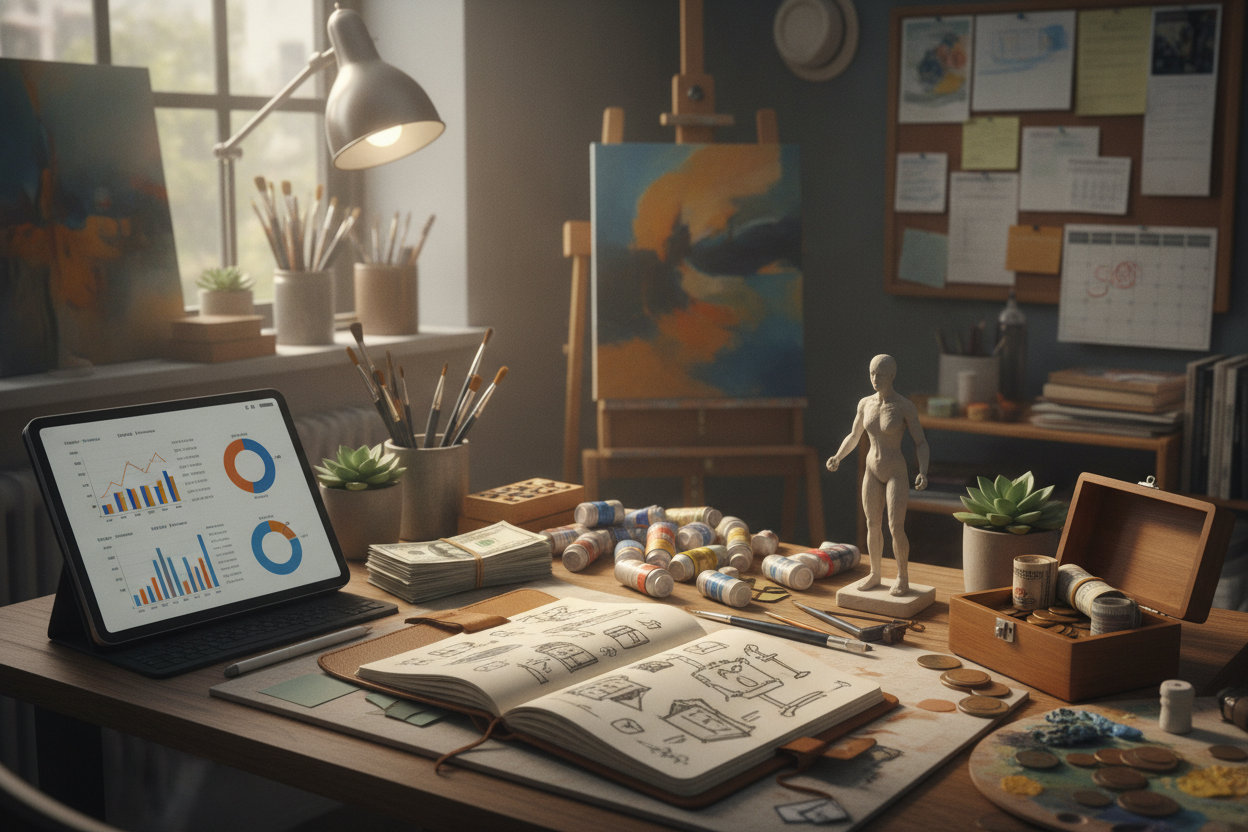
Budgeting is one of the most useful skills an artist can build, yet it is often overlooked. A budget gives you a clearer picture of how much your practice costs and how much flexibility you really have. It helps you avoid surprises and make decisions with more confidence.
Start by listing your regular expenses, including supplies, software, studio costs, transportation, marketing, and event fees. Then separate those from project-specific costs so you can see what is recurring and what changes from month to month. This makes it easier to plan for both steady business needs and one-time opportunities.
Income can be irregular for many creatives, so your budget should be realistic. Use past earnings as a guide instead of assuming every month will look the same. If possible, set aside a portion of income for taxes, savings, and slower periods. Even small reserves can make your business more stable over time.
The best budgets are simple enough to update regularly. Review them monthly or after major projects so you can adjust as your workload changes. A budget is not meant to limit your creativity. It gives you structure, reduces financial stress, and supports smarter growth. When artists know where their money goes, they gain more control over the future of their work.
Leave a Reply